
There are bad statements. There are statements that need a little editing. And then there are statements that make communications professionals wonder, “Who approved this?”
Enter the New Jersey Devils.
Ahead of Tuesday’s highly anticipated matchup against the Winnipeg Jets, the Devils announced that former Jets goaltender Connor Hellebuyck wouldn’t be playing against his old team.
Disappointing? Sure. A PR disaster? Yes. I’ll explain.
In a statement attributed to General Manager Sunny Mehta, the team acknowledged Hellebuyck’s desire to play before offering this gem:
“Playing in this game would potentially give us a reduction in our expected win probability.”
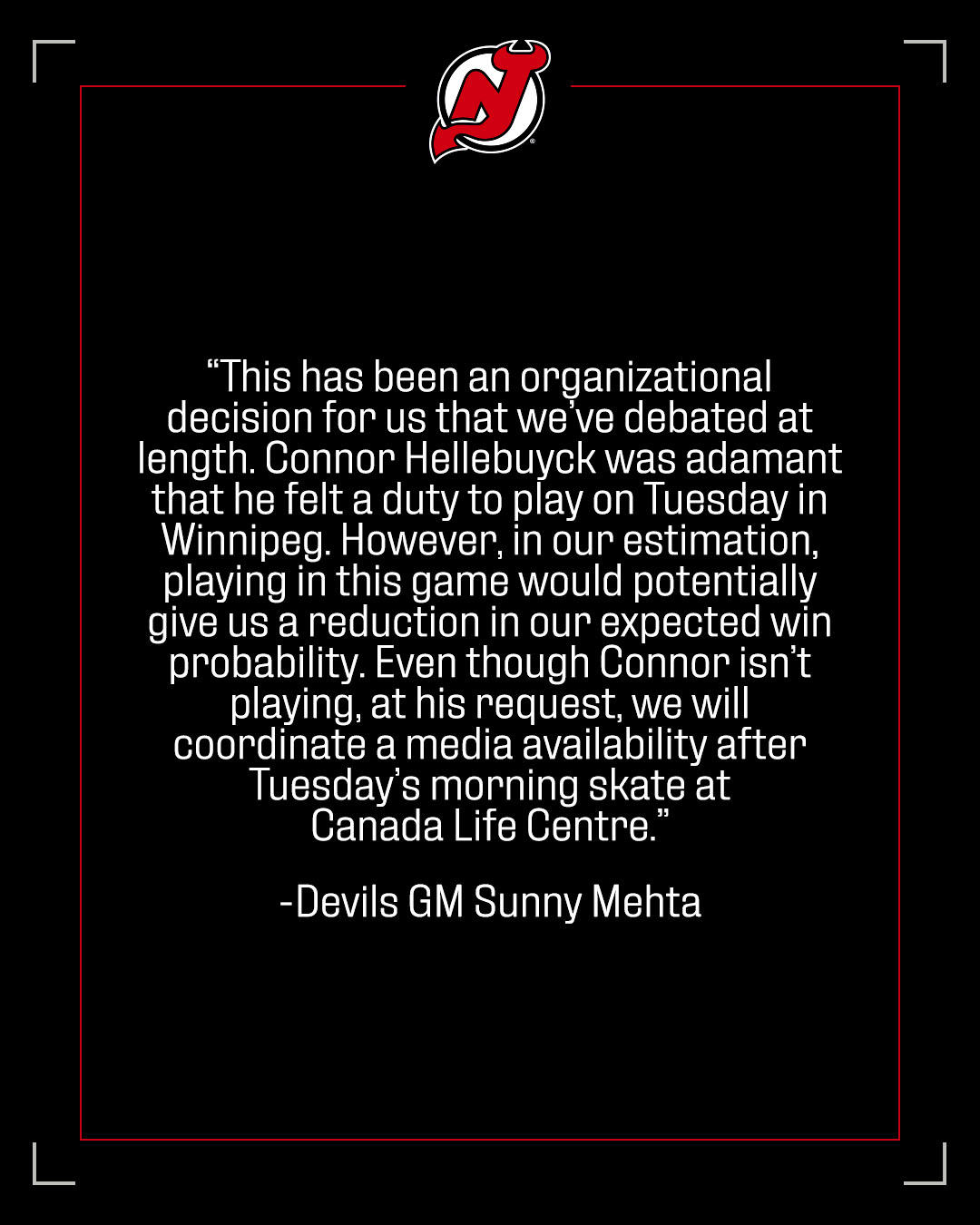
Ouch.
We’re talking about a three-time Vezina Trophy winner and former NHL MVP. Hellebuyck is one of the best goaltenders in the league, and his own team just suggested that putting him in net could hurt its chances of winning? That’s certainly one way to put it.
Read the Room. Then Read the Statement Again.
Hellebuyck’s departure from Winnipeg was already surrounded by controversy. Following Team USA’s Olympic gold-medal victory over Canada, he spoke about harassment and concerns involving his family’s safety. That behavior is unacceptable, regardless of anyone’s feelings about hockey.
With emotions already running high, his return to Winnipeg was never going to be an ordinary Tuesday night.
The Devils had every reason to choose their words carefully. Instead, they highlighted an internal disagreement and handed critics another storyline.
Here’s the real kicker: They didn’t need to say any of it.
Why not offer a far more straightforward explanation involving workload management and the team’s upcoming schedule. This is something teams deal with every game. Why not lead with that?
A Little PR Advice Goes a Long Way
A good statement should answer questions, not create five new ones.
Good PR teams do more than proofread. They anticipate reactions, recognize sensitivities, and occasionally tell leadership, “We are absolutely not saying that.”
Not every internal discussion belongs in a public statement. And just because something is technically accurate doesn’t mean it’s the smartest thing to say.
Whether you’re running an NHL team, a business, or a nonprofit, the lesson is simple: You can’t always control how people react to a decision, but you can avoid making the explanation the bigger story.
Sometimes the best communications strategy is knowing what to leave unsaid.
Full disclosure: My dad is an assistant coach for the Winnipeg Jets, so I’ve been following this storyline a little more closely than most. My loyalties on Tuesday night are probably obvious, but my professional opinion stands: This statement could’ve used another trip through the PR department.
Allison Housley, Account Executive
K2 and Company