
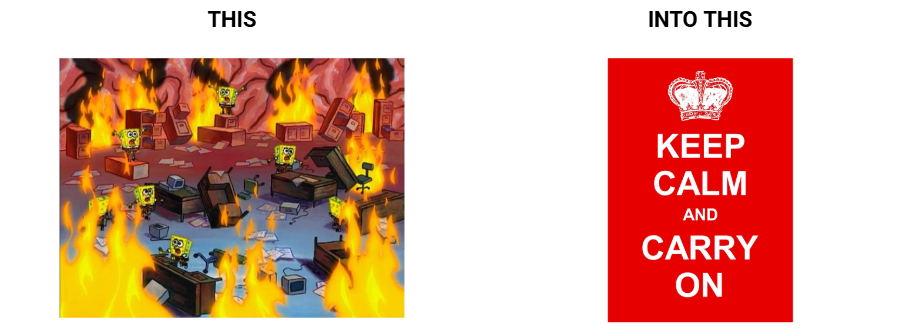
During World War II, war-effort messaging campaigns were some of the most important public-facing materials. Here in America, we had well-known campaigns such as Rosie the Riveter, Uncle Sam Needs You, and Captain America for Marvel fans. But Britain had its own as well – Keep calm and carry on. While many today don’t remember the phrase’s historical significance, you may remember its peak as a meme.
This 80+ year-old mantra that gave Europe hope amid catastrophe and disaster, and gave millennials a sense of resolve amid a global recession, should be a reminder that, amid a crisis, running around in panic does not lead to the best outcome; it’s a mentality of keeping calm and carrying on that does.
Whether it’s Minnesota that is billions of dollars deep in fraud cases, or Republicans forced to reckon with the fallout of racist messages from the next generation, or Democrats contending with the violent rambling of Jay Jones, one thing is for certain – there always seems to be a crisis.
At K2 & Company, we have dealt with our fair share of crises over the years (it comes with the territory!), but here’s how we turn:
- EVERYBODY LIES: Building trust is key, and in any new client relationship, I encourage clients to always be honest with us; not because we want to embarrass them, but because we want to support their mission and prevent awkward situations down the line. But to quote television’s favorite doctor, Gregory House, everybody lies. It is an inherent part of life, and when dealing with principals and their deepest darkest secrets, you should always count on someone lying to you.
- PLAN AHEAD: As much as “everybody lies” is a guarantee in any relationship, it’s also a guarantee that you will face a crisis at some point in your relationship, and you need a plan in place. Who should be involved in those conversations? Who should you address first? Who is your spokesperson, etc? These are all important questions that will save you a lot of time when you get that initial question.
- VULNERABILITY STUDIES ARE A TIME SAVER: Everybody lies, but there are ways to help circumvent the unknown – vulnerability studies. Understanding the strengths of a candidate, principal, or company is a given, but knowing where they are the weakest and are exploitable is a far greater strength in your arsenal. Conducting vulnerability studies so you can understand exactly what you’re dealing with may not fully insulate you from a crisis, but gives you a 90% shot of understanding how to deal with vulnerabilities before they become a problem and gives you a greater shot of preventing them from reaching full crisis mode.
- KEEP CALM: The first thing most people do when they’re in the midst of a crisis is exude various emotions throughout the process. Feeling hurt, blindsided, angry, sad, or even scared are all normal emotions to have – but they should not be the driving emotion behind decision-making. In fact, when emotions are heightened, this is when the biggest mistakes within a crisis response are made. In moments of crisis, keeping calm and staying rational is key. Take 10 minutes to acknowledge the emotions, and then it’s time to get to work as a team.
- ACT AS A TEAM: Lone wolves are never as successful as when they work together – as a team. This is where the trust you’ve built in one another and in the folks you’ve hired is tested. Working as a team means overcommunicating, talking through all the options, and ensuring everyone is on the same page so when all is said and done, you walk away from a crisis resolved together and united in that trust.
- EXECUTE THE PLAN: It should feel like a given, but in moments of crisis, emotions come with it. If you have kept calm and worked together as a team to build a response to the crisis you are facing, you need to execute that plan. When you act on emotion, you carry yourself and your team through a rollercoaster of decisions and stalls that may result in you missing your window to respond in a manner that allows you to achieve that best-case scenario. Now is the time to trust yourself and your team to have built the best plan possible and move forward.
- REMEMBER, THE RIGHT DECISION ISN’T ALWAYS YOUR BEST CASE SCENARIO: While the best case scenario of any crisis is to prevent that crisis from bubbling to the surface, the second best case is walking away from the crisis with the least damage inflicted to your ultimate goals and objectives. However, the right decision for ending a crisis doesn’t always mean it’s your best-case scenario. While this is a tough pill to swallow, we must acknowledge that in some crises, goals and objectives change, emotions get involved, and the situation changes, and what was your best-case scenario is no longer the best path forward. Sometimes, you need to know when to let go.
Crises are moments we dread but are inevitable. It’s important to have a team around you that is experienced and prepared to tackle any challenges head-on. Looking for a team that can help you prepare for the inevitable storm coming your way? Reach out to K2 & Company and see how we can help position you to best weather the storm.
-Preya Samsundar, Communications Director